Assembly tables and workstations
We design professional assembly tables and workstations made of aluminium profiles to measure for your facility, from a single table to an entire assembly line. Before production we prepare a 3D visualisation on which you can see the workstation before it is built.
We place emphasis on ergonomics and on employees' working conditions. Below you will find an overview of table types, help with choosing a category and basic information about the construction.
Podkategorie
Videa
Workstations designed around your operation
We design individual assembly workstations with an emphasis on ergonomics. We prepare 3D visualisations and, if you are interested, we also build the workstation: one that meets your requirements down to the last detail and offers working conditions that employees will look forward to.
The basis is an aluminium modular system with slotted profiles. Thanks to the slots along the entire length of the profile, the structure can be extended, modified or dismantled at any time, without welding. The tables we design show high stability and rigidity even though they are assembled from parts.
Table types and choosing a category
What we build
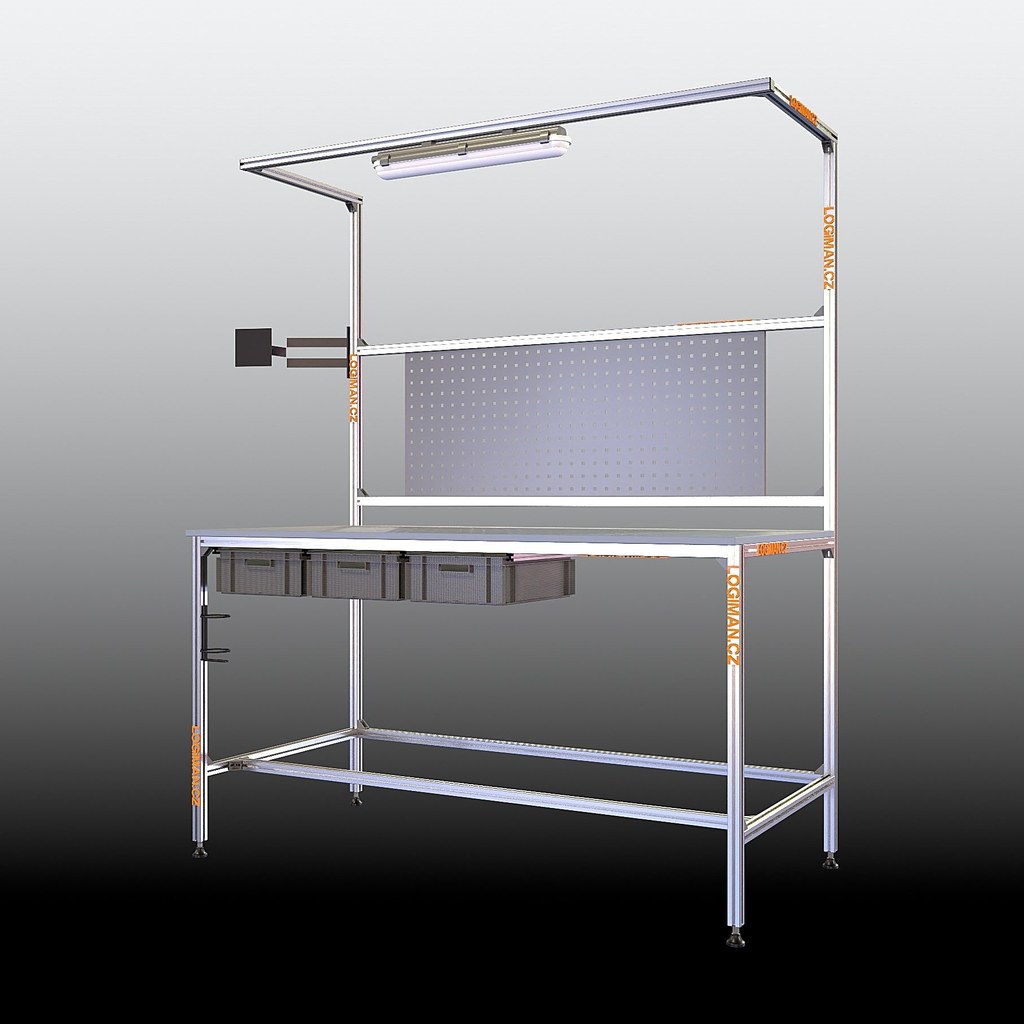
- electrically adjustable tables with lighting,
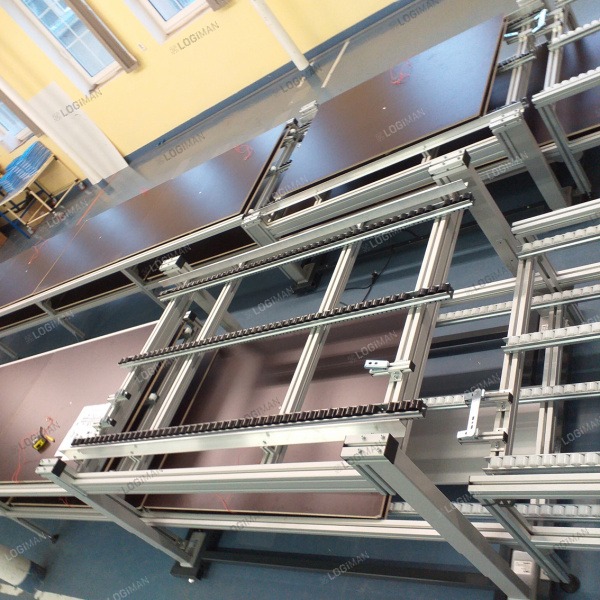
- assembly tables with shelves and gravity tracks,
- workbenches with a worktop of laminate, multiplex or edge-glued beech,
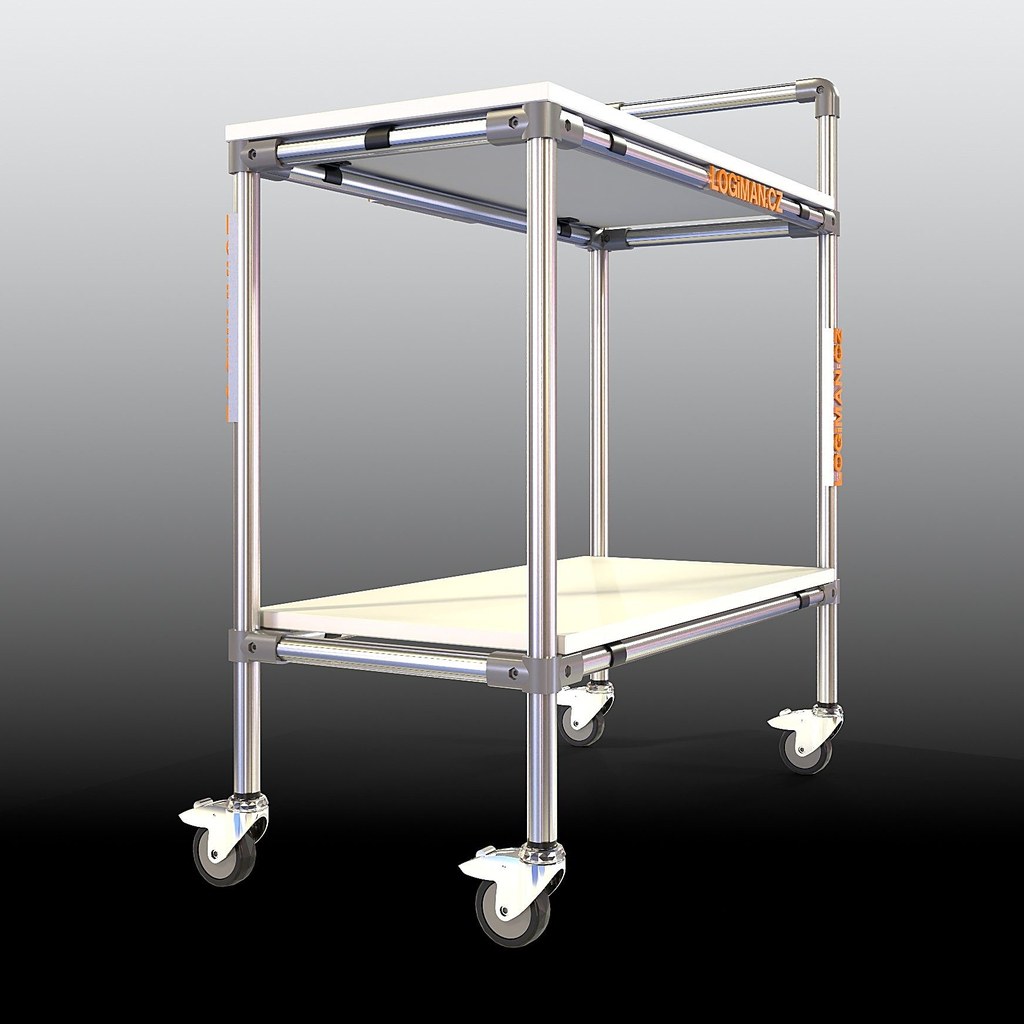
- mobile tables,
- height-adjustable tables,
- ergonomic workbenches,
- modular workbenches.
None of them is a finished product with fixed dimensions. You choose the table type, dimensions, worktop material and equipment according to the work you do at the workstation, and anything can be added or rebuilt later.
Which category to choose
- A single workstation: the lightweight assembly table Light-30-A for assembly, kitting and inspection, the heavy-duty workbench 45 for more demanding operations, or a made-to-measure workbench.
- A workstation that moves: mobile workbenches and trolleys with stands for supplying material.
- Smooth flow of products: made-to-measure assembly lines with roller or gravity tracks and ball transfer tables.
- Special requirements: specialised workbenches, for example clamping tables or robot bases, and protective safety fencing for machines.
Ergonomics and construction
Worktop height and lifting
In the design we make sure that the position can be changed during a shift (sitting, perching, standing), that material and tools are within reach and that the table stands firmly. The electrically controlled height adjustment of the tables is smooth and quiet, and we can do custom solutions as needed. Lifting columns with electric drive are used for smooth adjustment of the working height on tables that you assemble yourself.
For lifting a heavy instrument to a great height above the workbench we develop our own electric shelf lifting system. The load capacity of the shelf, its size and its speed can be set according to the individual needs of the customer.
Profiles and worktops
The profile size is chosen according to the load. The 8 mm slot is the common standard for workbenches and assembly workstations, the 10 mm slot is the strongest range for higher loads and long assembly lines, and the 6 mm slot is for light structures. Worktops made of laminated chipboard have a durable surface for ordinary workshop use; multiplex and edge-glued beech can be chosen according to the requirements of the workstation.
Production and assembly lines
An assembly workstation is built for precisely one operation: it needs a layout of parts within reach, adjustable tools, lighting and often height adjustment for different workers. Parts lie within reach in clearly arranged boxes, tools hang on a panel and the lighting shines exactly at the place of work. The table can have gravity tracks for part boxes, which advance forward on their own.
How to plan a workstation: reach and workflow
A good table starts with a good plan. Before choosing the height and size, it pays to go through what actually happens at the workstation: where things are taken from, where they are put down and in what order they are worked with.
Reach zones
A hand can comfortably reach only to a certain distance from the body. Things used constantly belong in the nearest zone in front of the worker, things used occasionally in a more distant one, and things used exceptionally off the work surface, on shelves or in a container. Anyone who has to stand up or stretch for an everyday item loses time and strains the back. That is why the storage shelves are sliding and adjustable: they are set exactly to the distance that suits the worker.
Workflow
Work should have a direction. Goods arrive from one side, are processed in the middle and leave on the other. Backward movements, crossing paths and waiting for space to be freed are waste. For packing this means unpacked shipments entering on one side, the packing zone in the middle, and labelling and placing finished shipments aside on the other. For assembly workstations the same applies to parts and finished pieces.
Why the workstation matters
Health and ergonomics
Long periods in an unsuitable posture, bending forward, highly repetitive movements and stretching for things are the most common causes of pain in the back, neck and shoulders and of tendon inflammation. A well-designed workstation reduces these risks significantly. Ergonomics is not a luxury: it is a way to reduce sickness absence, staff turnover and errors and to increase long-term output.
Speed and error rate
When every item has its place and is within reach, work flows faster and fewer mistakes are made. A table that has to be walked around or rearranged costs time with every piece.
Operational flexibility
Operations change. A table that can be rebuilt, raised, extended or added to survives a change of product range and of people, whereas a fixed piece of furniture does not.
Tidiness and safety
Cables, hoses and small items are routed within the structure, not across the floor. A firm, stable table does not rock or tip over, and the edges are finished.
Professional assembly: with us, or self-assembly
You can choose turnkey professional assembly as an optional service. You can have the workstation assembled by us, or assemble it yourself following the guide in the Structure assembly section, which describes how the profiles are joined and in what order.
What affects the price
- table dimensions and the number of workstations,
- the profile range chosen and its sturdiness,
- height adjustment, manual or electric,
- worktop material and surface,
- accessories: shelves, lighting, containers, ball units,
- special versions: stainless steel, non-standard shapes,
- method of delivery (assembled, unassembled) and transport.
For an estimate your brief is enough, and we will propose a variant and a cheaper alternative. It often pays not to skimp on ergonomics: fewer errors, faster work and less strain on workers are reflected in the price of the table.
The most common mistakes when choosing a table
- Choosing by appearance or by catalogue instead of by the work. A table for packing heavy boxes is different from a table for assembling small electronics.
- A fixed height for people of different heights. One height does not suit everyone and leads to back pain.
- A worktop that is too deep or too long without support. It sags and forces you to stretch.
- Underestimating lighting and cabling. Poor light and cables on the floor cost time and safety.
- Skimping on stability. A wobbling table makes fatigue worse.
- Not allowing for the growth of the operation. A table that cannot be rebuilt soon becomes a limitation.
- Ignoring hygiene in food processing and pharmaceuticals.
How to enquire about a workstation
Just describe what is done at the workstation: table type, dimensions, worktop material and accessories. You can enter the same in the online enquiry form for tables, and we will get back to you with a proposed solution and a price. For packing and dispatch tables you can set the dimensions, shelves and accessories yourself in the 3D generator, see Lightweight packing table system 30 and Heavy-duty packing table system 40.
Frequently asked questions
Do you make assembly workstations to order?
Yes. We design custom assembly workstations with an emphasis on ergonomics, prepare 3D visualisations and, on request, build the workstation to your requirements.
What are assembly tables made of?
Of modular aluminium profiles with slots along their entire length. Worktops can be made of laminate, multiplex plywood or edge-glued beech panel.
Can a table be mobile and height-adjustable at the same time?
Yes. All our tables and structures can be fitted with castors without losing their height adjustability.
How do I plan a workstation?
Go through what actually happens at the workstation: where things are taken from, where they are put down and in what order they are worked with. Items that are used constantly belong in the zone closest to the worker, those used occasionally in a more distant one.
What are the most common mistakes when choosing a table?
Choosing by appearance or catalogue instead of by the work, a fixed height for people of different heights, a worktop that is too deep or too long without support, underestimating lighting and cabling, skimping on stability and not allowing for the growth of operations.
Zadejte nám nezávaznou poptávku:
Napište nám, ozveme se vám na uvedený e-mail.